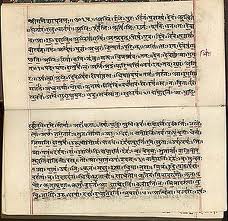
This article throws some light on the Origins of Hinduism.
 Just as there has been a huge amount of migration in the last few centuries from all over the world to North American provinces, there was a time millennia ago, when mighty rivers like Saraswati were wetting Indian lands, India was the preferred choice of destination for migration.
While a lot of places in the world were covered with ice, the Indian subcontinent, with its mighty rivers and its relative tropical climate, offered the most ideal place for settlements and habitations.
Huge number of tribes used to frequently migrate onto the Indian subcontinent in large numbers. Each incoming community had its own tribal deity and the environment became highly polytheistic with every community of few hundred or thousand individuals having its own God.
With thousands of deities present all over the place, the essence of religion itself was completely lost. It was necessary to arrest this polytheism and bring some sanity. That's when an institution called Saptarshis was formed.
The history of Hinduism started with the efforts of a well-formed organizational institution headed by Seven Sages, called Saptarshis, who aimed at arresting the excessive polytheism resulting from these migrations. Just as we have Pope for Christianity today, Hinduism, from the beginning, had this institution of seven sages who were mentioned in the Hindu scriptures as the patriarchs of the religion.
While a lot of places in the world were covered with ice, the Indian subcontinent, with its mighty rivers and its relative tropical climate, offered the most ideal place for settlements and habitations.
Huge number of tribes used to frequently migrate onto the Indian subcontinent in large numbers. Each incoming community had its own tribal deity and the environment became highly polytheistic with every community of few hundred or thousand individuals having its own God.
With thousands of deities present all over the place, the essence of religion itself was completely lost. It was necessary to arrest this polytheism and bring some sanity. That's when an institution called Saptarshis was formed.
The history of Hinduism started with the efforts of a well-formed organizational institution headed by Seven Sages, called Saptarshis, who aimed at arresting the excessive polytheism resulting from these migrations. Just as we have Pope for Christianity today, Hinduism, from the beginning, had this institution of seven sages who were mentioned in the Hindu scriptures as the patriarchs of the religion.